特首政策组组长于Social Impact Day 2026致开幕辞
同场诺贝尔和平奖得主Grameen Bank的主席Abdul Hannan Chowdhury教授分享社会创新见解
2026年3月30日
特首政策组组长黄元山博士于三月二十八日出席由丰盛社企学会(FSES)主办的「Social Impact Day 2026」并致开幕辞,探讨香港社会创新意念如何为解决社会问题的政策制定提供启示。孟加拉著名学者Abdul Hannan Chowdhury教授亦有出席,Chowdhury教授为现任南北大学校长及孟加拉格莱珉银行(Grameen Bank)主席,该银行在二○○六年获颁诺贝尔和平奖。Chowdhury教授分享了其对孟加拉国创新扶贫经验的演说。
以下为黄元山博士的致辞全文(只有英文):
Distinguished guests, Professor Chowdhury (Professor Abdul Hannan Chowdhury, Chairman of the Nobel Peace Prize-winning Grameen Bank and Vice-Chancellor of North South University), Dr Lam (Dr Ilex Lam, Board Chair of Fullness Social Enterprises Society Limited), Ted (Mr Ted Kwan, Co-founder and CEO of Fullness Social Enterprises Society Limited), Lawrence (Mr Lawrence Lui, Executive Committee Member of Fullness Social Enterprises Society Limited), ladies and gentlemen,
Good morning and a very warm welcome to Social Impact Day 2026.
It is a genuine privilege to stand before you today. I am deeply honoured to have been invited by the Fullness Social Enterprises Society (FSES) to deliver these opening remarks. FSES is far more than the organiser of this event – it is a living embodiment of the spirit we are here to celebrate. Since its founding in 2011 by a group of Knowledge Volunteers who believed that professional expertise could be placed in service of the community, FSES has grown into one of Hong Kong’s most pioneering forces in social innovation and entrepreneurship. As an Intermediary of the Government’s Social Innovation and Entrepreneurship Development Fund (SIE Fund), and as someone who had the privilege of serving on its Board in its early years, I have watched FSES demonstrate how cross-sector partnerships can turn policy intent into real social impact.
This year’s theme, “Poverty in Museums: The Future We Build Through Social Innovation”, is both bold and deeply meaningful. It draws directly from the vision of our distinguished guest of honour, Professor Chowdhury, and the Grameen Bank he leads – the same vision of Nobel Laureate Professor Muhammad Yunus and his call for a “Three Zeros” world: zero poverty, zero unemployment, and zero net carbon emissions. That vision invites us to imagine a future in which poverty is no longer endured in our communities, but studied as a relic of the past, confined behind museum glass. Today, I want to explore with you how social innovation in Hong Kong is helping us move closer to that future.
My own engagement with social innovation began long before I joined government. After a career in finance, I found myself drawn to the question of how good intentions can be turned into measurable, sustainable change. At Our Hong Kong Foundation, our very first research report in 2016 focused on social innovation and the need for systematic social impact assessment. Over the years, I served on the boards and advisory committees of organisations including The Hong Kong Council of Social Service, The Community Chest, Social Ventures Hong Kong, and others. Each role taught me the same fundamental lesson: the most powerful innovations often begin in communities, through trust, iteration, and deep human connection.
Today, in my role leading the Chief Executive’s Policy Unit, I have the privilege of seeing how ideas born in the field can be translated into policy at the centre of government. These experiences across finance, philanthropy, civil society, and government have shaped my conviction that social innovation is not peripheral to policy – it is one of its most important sources.
With that context, I would like to share three pathways through which social innovation in Hong Kong has scaled – through markets, through government, and through the broader social sector – and what this tells us about the next chapter of our collective work. In almost all of the examples I will mention, I have been directly or indirectly involved – as an investor, a board or committee member, or a chairman – which has allowed me to witness their evolution from the inside.
First, scaling through markets.
When a social innovation proves its value so clearly that the market adopts it as standard, real transformation occurs. Diamond Cab, launched in 2010 with the support of Social Ventures Hong Kong, is a powerful example. It began as Hong Kong’s first branded wheelchair-accessible taxi service, born from the simple recognition that people using wheelchairs deserve the same ease of mobility as anyone else. What started as a small fleet of adapted vehicles has now completed over 200 000 barrier-free trips and catalysed an industry-wide shift toward more accessible vehicles across the city. A prototype became a proof of concept, and a proof of concept became part of the market standard.
We see the same pattern in ageing and technology. Social enterprises were among the earliest to apply technology to the challenges of an ageing population, helping to catalyse the Gerontech and Innovation Expo cum Summit, which in its ninth edition last year showcased nearly 1 000 innovative solutions. These market-driven examples show that when services and products are designed around people and the planet rather than short-term transactions, markets can become powerful allies for social change.
This evolution in how we value outcomes also extends into mainstream finance. Hong Kong has issued approximately HK$240 billion in government green bonds since 2019, financing projects across green buildings, energy efficiency, and climate adaptation. The Hong Kong Exchanges and Clearing Limited has introduced climate-related disclosure requirements aligned with the ISSB Standards, with mandatory adoption expected by 2028. The EU-China Common Ground Taxonomy is helping to harmonise green finance standards across jurisdictions. In my work on green and sustainable finance, including serving as Vice Chairman of the Hong Kong Green Finance Association, I have seen how aligning financial returns with positive social and environmental outcomes can create impact at a scale that individual projects alone cannot achieve. What began as a niche idea – that capital should be deployed for measurable social and environmental impact – has become part of the architecture of mainstream finance.
Second, scaling through government.
The second pathway is when ideas tested by social entrepreneurs are adopted and expanded as public policy. Light Be’s Light Home programme, which offered transitional housing with wrap-around support for families waiting for public housing, demonstrated that housing is not just shelter – it is a springboard for upward mobility. The Government recognised this model’s power and scaled it first through transitional housing (targeting over 20 000 units) and then through Light Public Housing (targeting approximately 30 000 units by 2027-28).
The same trajectory is visible in the Community Living Room concept. Originally prototyped by social enterprises to relieve the pressure on families in subdivided units, the idea of shared neighbourhood spaces with kitchens, study areas, and communal facilities was so compelling that the Government launched a Pilot Programme in 2023. Ten projects are already serving, with further expansion underway.
These examples illustrate a vital truth: when social innovation demonstrates measurable impact, government can take it to scale and change life chances for thousands of families – a practical expression of targeted poverty alleviation.
Third, scaling through the social sector and philanthropy.
The third pathway lies in how the social sector and philanthropies themselves evolve. Over the years, we have seen a shift from counting activities to measuring outcomes. The Community Chest’s decision to fund Social Ventures Hong Kong introduced a new operating logic into traditional grant-making. The Hong Kong Jockey Club Charities Trust has developed outcome-based evaluation frameworks, increasingly requiring evidence of measurable social impact.
Perhaps the most compelling illustration is Hong Kong’s first Pay-for-Success project, “Start from the Beginning”, developed by Oxfam Hong Kong with The University of Hong Kong and The Education University of Hong Kong. It was not only Hong Kong’s first social impact bond, but the world’s first Pay-for-Success project focused on language education for ethnic minority children. The results were remarkable: participating students improved their Chinese character pronunciation scores by threefold and their word association scores by over 400 per cent. When philanthropy and the social sector reward evidence, innovation stops being a niche and becomes part of how the whole system works.
From Innovation to Policy – and the Next Frontier
Across these three pathways, we see a consistent pattern: ideas tested by social entrepreneurs demonstrate measurable impact and, over time, inform and transform public policy. This is not government telling society what to do – it is society showing government what is possible.
The SIE Fund, with which I have worked closely over many years, embodies this enabling philosophy. Since its establishment in 2013, and with an additional injection in 2021-22, it has supported more than 600 projects, reaching over 249 000 beneficiaries and creating more than 3 200 jobs, many for the underprivileged. An evaluation by The University of Hong Kong found that every dollar invested generated HK$5.58 in social impact.
Ladies and gentlemen, the theme of today’s gathering asks us to imagine a world where poverty is studied in museums rather than endured in communities. In Hong Kong, social entrepreneurs have already shown that innovative, evidence-based, cross-sector solutions can fundamentally change people’s lives.
From more than a decade of personal engagement with this community, I have learned that the most powerful innovations begin in the field – through trust, iteration, and deep human connection. When they are rigorously measured and honestly assessed, they carry a proof of concept strong enough to reshape how the government, market and social sector think and how systems are designed.
I invite each of you to see your projects not as isolated programmes, but as policy, market and social sector prototypes – part of Hong Kong’s research and development laboratory for social policy. If we want poverty to belong in museums rather than in the daily lives of our fellow citizens, we must continue to bring innovation into communities and evidence into policy, especially for families in subdivided units, single-parent households, and elderly people living alone.
Thank you once again to FSES for this wonderful occasion, to Professor Chowdhury for travelling so far to share your wisdom, and to each and every one of you for the remarkable work you do every day to build a more caring and inclusive Hong Kong.
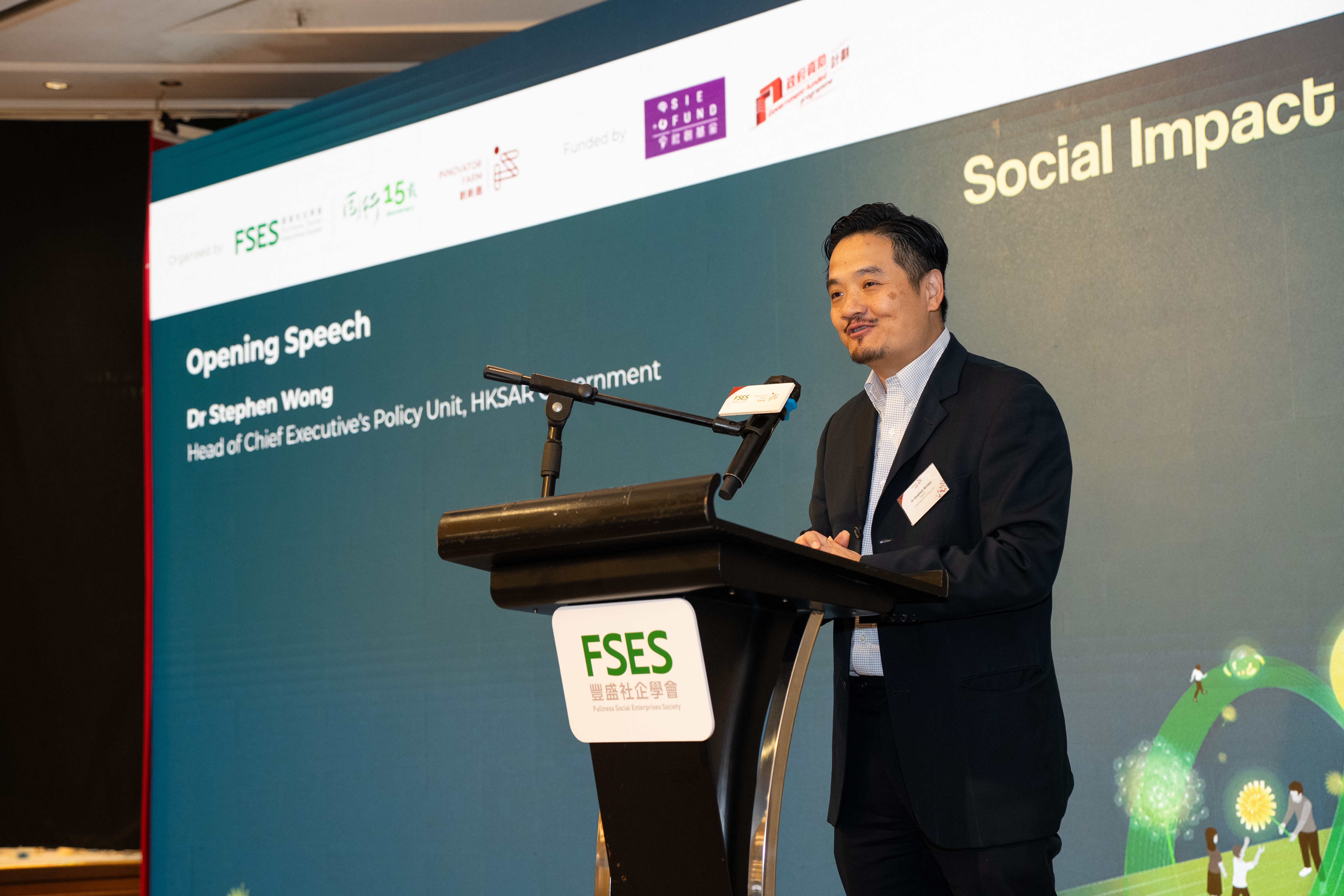 黄元山博士出席由丰盛社企学会主办的「Social Impact Day 2026」并致开幕辞。
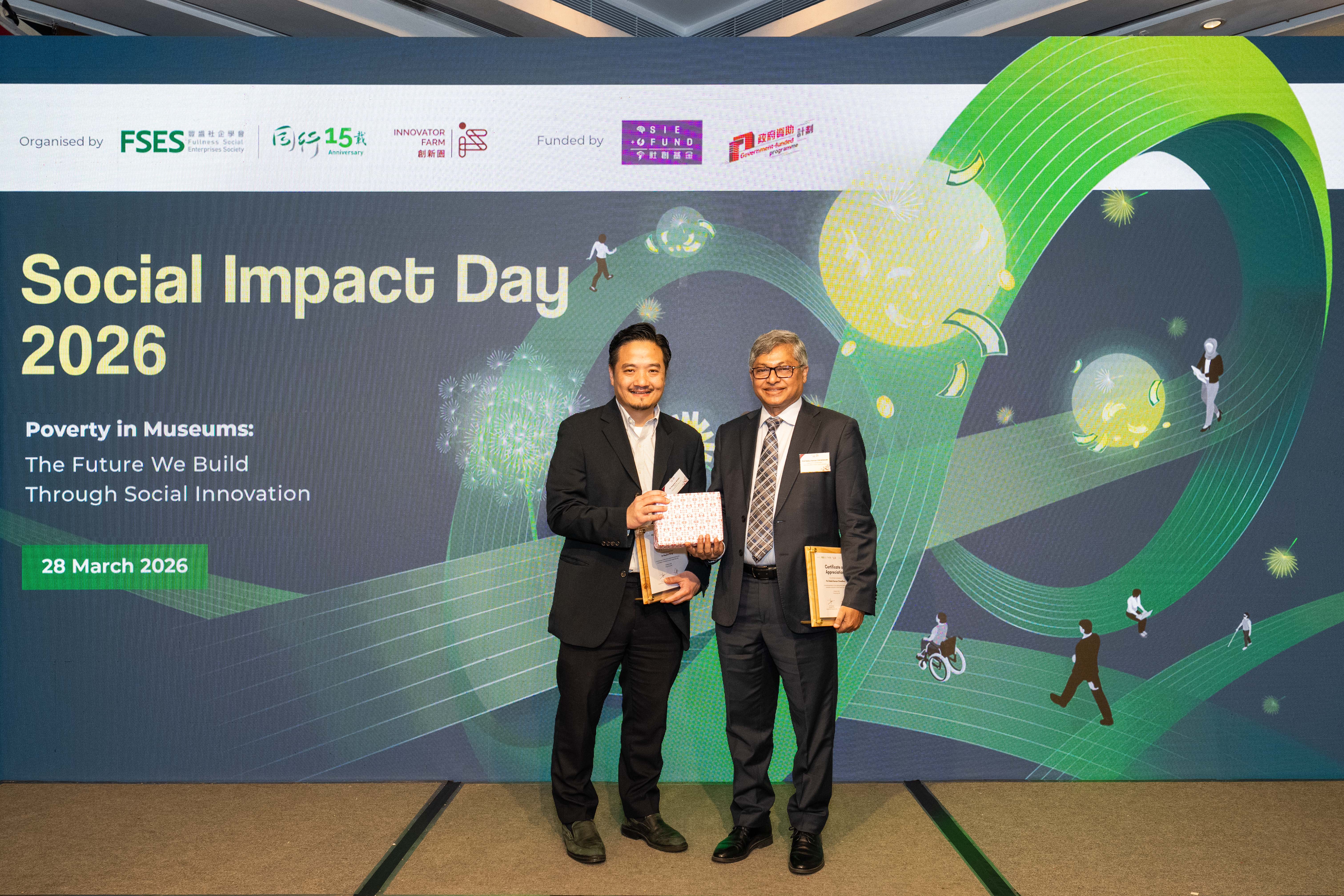 黄元山博士与南北大学校长及孟加拉格莱珉银行(Grameen Bank)主席Abdul Hannan Chowdhury教授(右)出席「Social Impact Day 2026」。
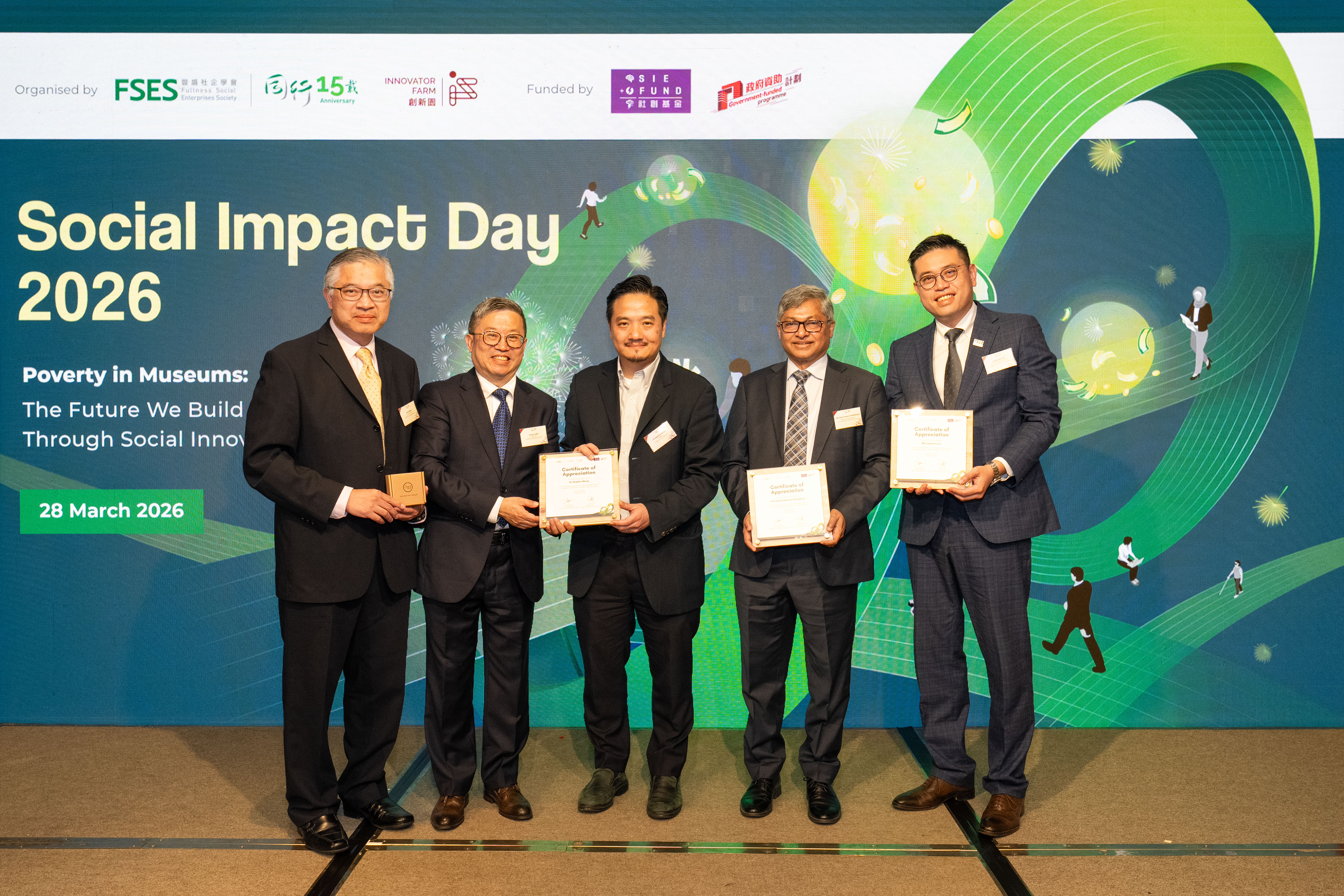 黄元山博士与丰盛社企学会联合创办人及总干事关志康(左一)、丰盛社企学会董事会主席林家强博士(左二)、南北大学校长及孟加拉格莱珉银行(Grameen Bank)主席Abdul Hannan Chowdhury教授(右二),以及丰盛社企学会执行委员会成员雷炜程(右一)合照。